Family
Fatherhood: small habits that matter, and what the research says
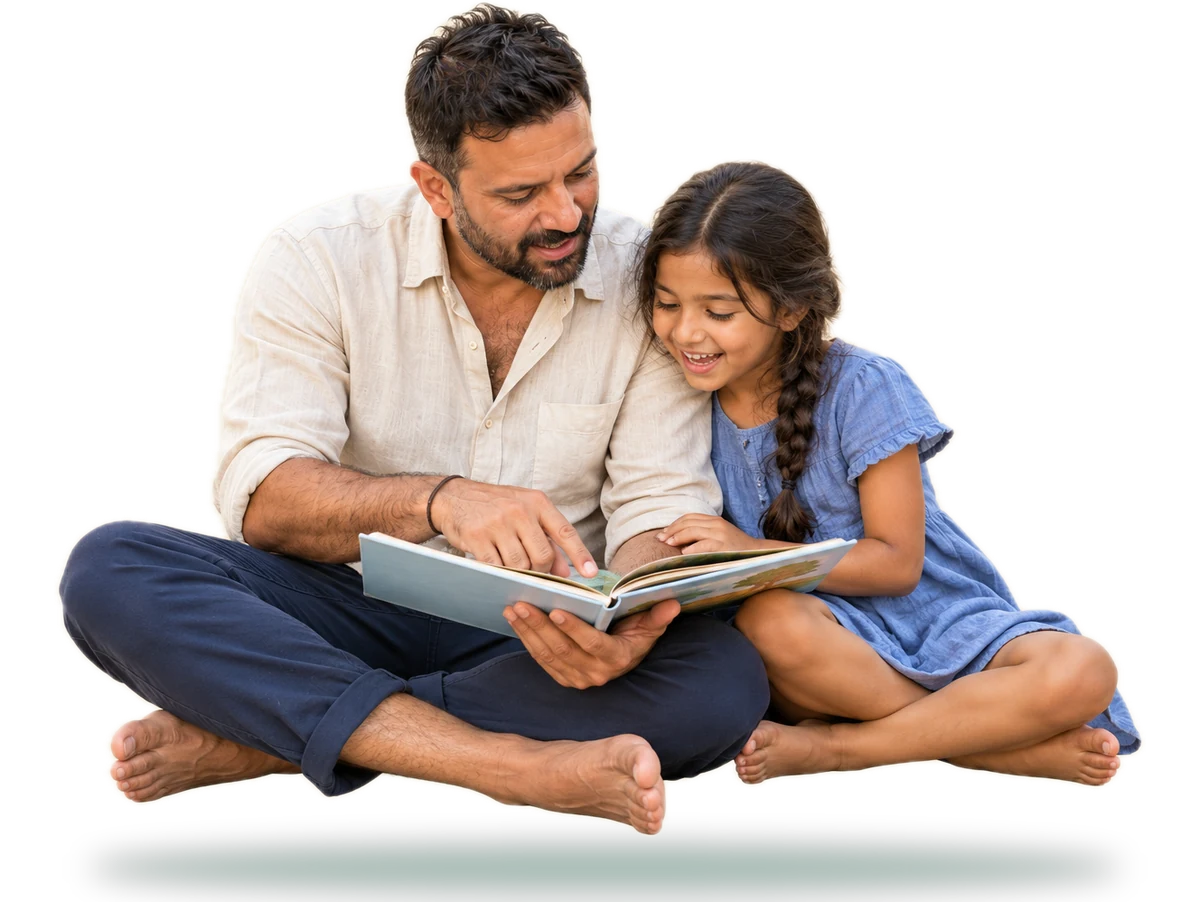
Being a good father is rarely about big gestures. It is mostly made of small, repeated moments that tell a child: you matter to me, and I am paying attention. This article looks at what the research says, six habits that fit into an ordinary day, and the part that fathers’ own wellbeing plays.
What the research says about involved fathers
A 2008 systematic review in Acta Paediatrica by Sarkadi and colleagues looked at long-term studies that followed children over time. It included 24 publications, and 22 of them described positive effects of father involvement. The review defined involvement broadly, including living with the child, direct engagement, and taking responsibility, and it covered father figures as well as biological fathers. It found that father engagement seemed to reduce behavioural problems in boys and psychological problems in young women, and to support children’s cognitive development. The authors identified engagement, meaning direct interaction with the child, as the kind of involvement worth supporting.
A 2019 review in Frontiers in Psychology by Rollè and colleagues looked at 40 studies on father involvement and children’s cognitive development. It found that most of the studies reported a positive and statistically significant association. The types of involvement examined included talking and verbal interaction, reading, physical play, caregiving and involvement with school. One finding was that fathers’ book reading significantly predicted children’s language skills.
A few honest cautions go with this. These are associations, not proof that one thing causes another. The reviews note that studies define and measure “involvement” in different ways. And most of the research comes from other countries, so it is a guide rather than a Sri Lankan verdict. The consistent message, though, is encouraging: when fathers take part in their children’s lives, children tend to do better.
Six small habits that matter
1. Show up in small, regular ways
Children notice patterns more than occasional big days out. A ritual they can rely on counts for a lot: the walk to school, a bedtime story, Sunday breakfast, ten minutes of cricket in the evening. Pick something you can keep doing even when life is busy, and protect it.
2. Be curious about their world
- Ask about the things they care about, even if you find them confusing: games, music, friends, worries.
- Ask questions that need more than “fine”: “What was the best part of today?” “What was the hardest?”
- Listen without correcting every time. Being heard builds trust.
3. Read, talk and play
Reading aloud, chatting and playing are some of the simplest ways to give a child what the WHO, UNICEF and the World Bank’s Nurturing Care Framework describes as responsive caregiving and opportunities for early learning. As the research above suggests, fathers’ reading and verbal interaction are linked to children’s language and thinking. You do not need special books or toys. A picture book, a game of cards or a story made up on the spot works.
4. Talk about feelings, including yours
Children learn a great deal about handling emotion by watching the adults around them, and boys in particular often take their cues from the men in their lives. When you say “I’m feeling stressed today” or “I was upset about that”, you show them that feelings are normal and can be spoken about. You do not need to share everything. A little honesty goes a long way.
5. Say sorry, and repair
Everyone loses patience. What matters is what happens next. The developmental psychologist Edward Tronick found that even in healthy, secure relationships, caregivers and babies are in sync only about 30% of the time, and that the rest involves mismatches and the work of repairing them. That research was about babies, but the idea applies at every age: coming back after a mistake, saying “I shouldn’t have shouted, I’m sorry”, teaches a child that closeness survives conflict and that mistakes can be put right. You do not have to be a perfect father. You have to be a father who repairs.
6. Take care of yourself
Children do best with a father who is rested, healthy and supported. Sleep, exercise, check-ups and friendships are not selfish. They are part of looking after your family.
Fathers’ mental health matters too
Mothers’ mental health after birth is widely discussed. Fathers’ is not, but it matters just as much. A 2010 meta-analysis in JAMA by Paulson and Bazemore pooled 43 studies with 28,004 participants. It found that about 10.4% of fathers experienced depression during pregnancy or after the birth of a child, and that the figure rose to around 25.6% at three to six months after birth. It also found a moderate positive link between a father’s depression and the mother’s.
If you feel constantly low, anxious, irritable or detached after becoming a father, that is common, it is not a weakness, and it is worth talking about. Our articles on why men put off talking about their health and on how to talk to a man who is struggling explain how to take the first step.
The reality for Sri Lankan fathers: leave and time
Practical barriers are real. Under Public Administration Circular 03/2006, a public officer is entitled to three working days of leave when a child is born to his wife, to be taken within three months of the birth. In the private sector, paternity leave is decided company by company, and according to the Daily FT even progressive employers rarely offer more than the public-sector three days. A 2025 academic paper by Wijeyesekera describes paternity leave in Sri Lankan law as nominal and argues that it undermines the father-child relationship.
That makes the small daily habits above more important, not less. If you are an employee, it is worth asking your employer about flexible hours for school events and family emergencies. If you run a team, our guide to marking International Men’s Day at work includes ideas for supporting fathers.
For grandfathers, uncles and mentors
Boys need more than one steady man in their lives. The 2008 review included father figures, not only biological fathers, and the principle holds: if you are a grandfather, uncle, teacher, neighbour or coach, your attention matters too. A boy who knows several men are on his side is better placed to grow up secure and kind.
It is never too late
If distance has grown between you and a son or daughter, start small. A message, a shared meal, a simple “I’ve been thinking about you”. Relationships can be rebuilt, usually one small step at a time.
This article is general information, not a substitute for professional advice. If you are worried about your own or someone else’s wellbeing, speak to a doctor or qualified professional.
Frequently asked questions
How can I be a better father if I have very little time?
Focus on small, regular moments rather than big occasions. The 2008 systematic review in Acta Paediatrica singled out engagement, meaning direct interaction with the child, as the form of father involvement that helps. A short daily routine such as a bedtime story, the walk to school or ten minutes of play is a good place to start.
Does reading to my child really help?
Research suggests it does. A 2019 systematic review of 40 studies in Frontiers in Psychology reported that fathers’ book reading significantly predicted children’s language competences. That kind of research shows an association, not proof of cause, but reading together is free, enjoyable and good for closeness.
Is it normal for a father to feel low or anxious after a baby is born?
It is more common than most people expect. A meta-analysis in JAMA of 43 studies found that about 10.4% of fathers experienced depression in the prenatal and postpartum period, with higher rates, about 25.6%, at three to six months after birth. If you are struggling, talk to a doctor, and use the helplines in this article.
How much paternity leave do fathers get in Sri Lanka?
Public officers are entitled to three working days of leave when a child is born to their wife, to be used within three months of the birth, under Public Administration Circular 03/2006. In the private sector it is decided company by company, and a 2025 academic paper describes paternity leave in Sri Lankan law as nominal.
What if I have made mistakes or drifted away from my child?
Start small and be honest. Research on parent and child relationships describes repair as one of the most important parts of parenting: going back after a conflict, acknowledging what happened and reconnecting. A message, a shared meal or a simple “I’ve been thinking about you” can begin it.
Sources
- Sarkadi A, Kristiansson R, Oberklaid F, Bremberg S (2008). “Fathers’ involvement and children’s developmental outcomes: a systematic review of longitudinal studies.” Acta Paediatrica 97(2), 153-158. doi.org/10.1111/j.1651-2227.2007.00572.x
- Rollè L, Gullotta G, Trombetta T, Curti L, Gerino E, Brustia P, Caldarera AM (2019). “Father involvement and cognitive development in early and middle childhood: a systematic review.” Frontiers in Psychology 10. www.frontiersin.org/articles/10.3389/fpsyg.2019.02405/full
- Paulson JF, Bazemore SD (2010). “Prenatal and postpartum depression in fathers and its association with maternal depression: a meta-analysis.” JAMA 303(19), 1961-1969. rti.org/publication/prenatal-postpartum-depression-fathers-association-maternal-depression-meta-analysis
- Greater Good Science Center, UC Berkeley. “Family conflict is normal. It’s the repair that matters.” (summarising Tronick and Gianino’s research on interactive mismatch and repair). greatergood.berkeley.edu/article/item/family_conflict_is_normal_its_the_repair_that_matters
- Nurturing Care Framework for Early Childhood Development (WHO, UNICEF and the World Bank, launched 2018). nurturing-care.org
- Ministry of Public Administration, Sri Lanka. Public Administration Circular 03/2006 (paternity leave for public officers). pubad.gov.lk/web/images/circulars/2006/E/03-2006(e).pdf
- Daily FT (15 June 2019). “Parenting change.” www.ft.lk/FT-View/Parenting-change/58-680067
- Wijeyesekera R (2025). “Responding to the child’s need for the father’s presence through Sri Lankan labor law.” archive.cmb.ac.lk/handle/70130/8680
- 1926 National Mental Health Helpline (Find A Helpline listing). findahelpline.com/organizations/1926-national-mental-health-helpline
- CCCline 1333, CCC Foundation. 1333.lk
- Sri Lanka Sumithrayo. srilankasumithrayo.lk
Facts checked against these sources on 3 October 2026.
Get updates from IMD Sri Lanka
Venue, programme and speaker news as soon as it is confirmed.